
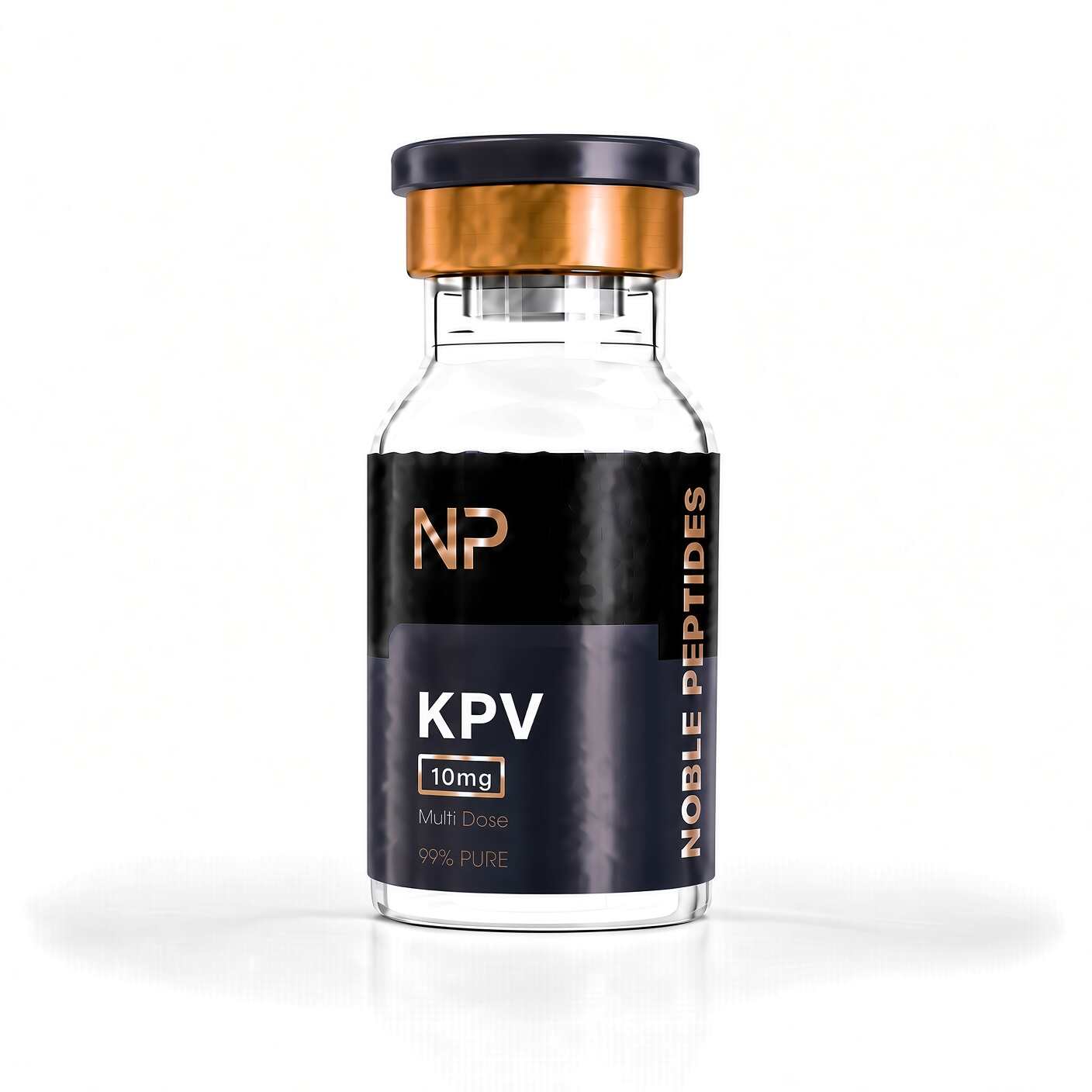
What Is KPV Peptide?
KPV peptide (Lys-Pro-Val) is a tripeptide fragment derived from α-melanocyte-stimulating hormone, prized in research for its cell-level anti-inflammatory and tissue-repair actions. In controlled lab settings—covering macrophage, keratinocyte, endothelial, and neural-glial models—KPV probes how cytokines, cell migration, and barrier function interact during inflammation and healing.
Why Choose KPV Peptide?
Researchers choose KPV peptides when they need a high-precision tool to model inflammation resolution and barrier restoration. Its rapid cellular uptake and clear dose–response make it ideal for scratch assays, cytokine profiling, and barrier studies. Manufactured under ISO-certified conditions and verified to ≥ 99% purity—each batch is endotoxin-screened (< 0.1 EU/mg)—ensuring consistent, reproducible data for KPV peptide research.
What Sets KPV Peptide Apart?
Unlike broad-spectrum anti-inflammatory agents, KPV peptide acts through a specific Lys-Pro-Val sequence to simultaneously modulate immune and epithelial cell functions. Its dual capacity to induce antioxidant enzymes, suppress pro-inflammatory mediators, and accelerate barrier repair in ex vivo explants makes KPV a uniquely versatile reagent for integrated skin, neural, and vascular inflammation research.
What are the key kpv peptide benefits?
Benefits include cytokine modulation (↓ IL-1β, TNF-α), accelerated cell migration, and improved barrier recovery.
How do researchers use KPV peptides?
Commonly in scratch assays, macrophage-cytokine tests, ex vivo skin explants, and neural-glial inflammation models.
What is the typical kpv peptide dosage?
In vitro studies range from 100 nM to 10 µM; in vivo rodent assays often use 0.1–1 mg/kg.
Does KPV peptide have side effects?
As a research reagent, KPV shows no systemic side effects but must be handled under lab-safety protocols.
Can KPV peptides be combined with other peptides?
Yes—often co-studied with BPC-157, GHK-Cu, or TB-4 to explore synergistic tissue-repair and anti-inflammation effects.
Where can I buy KPV peptide online?
Right here, we offer ISO-certified KPV peptide at ≥ 99% purity and low endotoxin—available for research use only.
Reviews
There are no reviews yet.