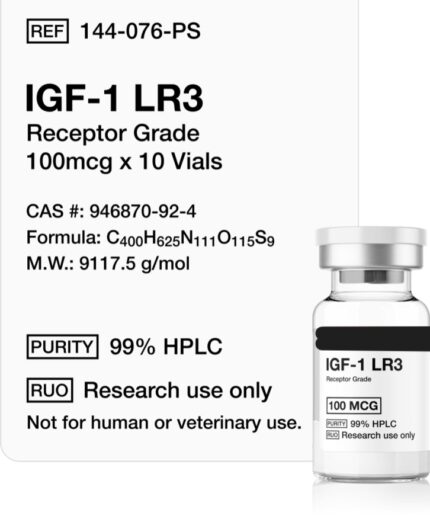
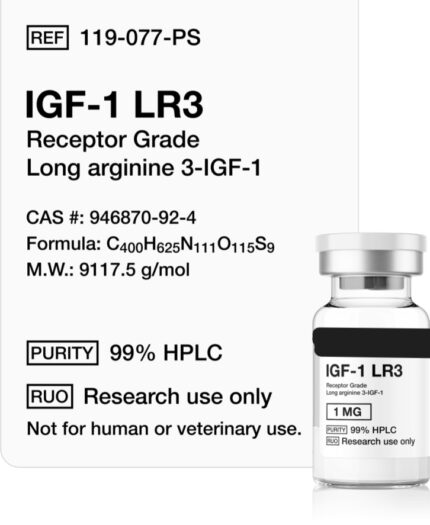
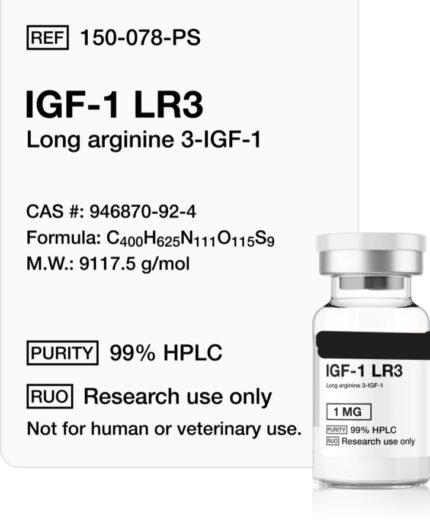
IGF-1 Proteins
IGF-1 Supplement
What is IGF protein?
IGF-1 (Insulin-like Growth Factor 1), also known as somatomedin C, is a small peptide hormone and protein made up of 70 amino acids in a single chain, with three intramolecular disulfide bridges. It has a molecular weight of about 7,649 daltons. Structurally similar to insulin (sharing about 50% sequence homology), IGF-1 is primarily produced in the liver in response to growth hormone (GH) from the pituitary gland, though smaller amounts are made locally in other tissues like muscles and bones. It acts as the main mediator of GH’s effects, promoting cell growth, proliferation, differentiation, tissue repair, and anabolic processes (such as building muscle and bone). IGF-1 has insulin-like properties (e.g., helping with glucose uptake) but is far more potent for growth promotion. It circulates in the blood mostly bound to binding proteins (like IGFBP-3) for stability and regulation, and it plays key roles in childhood growth, adult metabolism, muscle regeneration, and overall development. Levels peak during puberty and decline with age.
What foods are high in IGF?
Animal proteins raise IGF-1 levels most, especially red meat, fish, eggs, and dairy products (milk, cheese, yogurt). Dairy is particularly effective at increasing IGF-1 because it contains IGF-1 itself and stimulates production. High-sugar foods and refined carbohydrates can also contribute indirectly.
Animal proteins raise IGF-1 levels most, especially red meat, fish, eggs, and dairy products (milk, cheese, yogurt). Dairy is particularly effective at increasing IGF-1 because it contains IGF-1 itself and stimulates production. High-sugar foods and refined carbohydrates can also contribute indirectly.
What happens if IGF is high?
Chronically high IGF-1 can cause excessive tissue growth (acromegaly), enlarged bones and organs, increased risk of certain cancers, insulin resistance, higher cardiovascular risk, and potentially accelerated aging.
Chronically high IGF-1 can cause excessive tissue growth (acromegaly), enlarged bones and organs, increased risk of certain cancers, insulin resistance, higher cardiovascular risk, and potentially accelerated aging.
How to boost IGF-1 naturally?
Resistance training (weightlifting), eating enough protein (especially from animal sources), getting 7–9 hours of quality sleep, maintaining healthy vitamin D and zinc levels, and avoiding very long fasting periods all help raise IGF-1 naturally.
Resistance training (weightlifting), eating enough protein (especially from animal sources), getting 7–9 hours of quality sleep, maintaining healthy vitamin D and zinc levels, and avoiding very long fasting periods all help raise IGF-1 naturally.
Is IGF good or bad?
IGF-1 is neither purely good nor bad. It is essential for growth, muscle repair, bone health, and recovery in youth and during training, but chronically high levels increase disease risk and may shorten lifespan, while very low levels impair vitality and repair.What happens if your IGF-1 is low?
Low IGF-1 leads to poor growth in children (short stature), muscle wasting, reduced bone density, fatigue, increased body fat, lower energy, weaker immune function, and higher risk of metabolic and cardiovascular problems in adults.
IGF-1 is neither purely good nor bad. It is essential for growth, muscle repair, bone health, and recovery in youth and during training, but chronically high levels increase disease risk and may shorten lifespan, while very low levels impair vitality and repair.What happens if your IGF-1 is low?
Low IGF-1 leads to poor growth in children (short stature), muscle wasting, reduced bone density, fatigue, increased body fat, lower energy, weaker immune function, and higher risk of metabolic and cardiovascular problems in adults.
What are the diseases associated with IGF-1?
High IGF-1: acromegaly, gigantism, increased risk of breast, prostate, and colorectal cancers.
Low IGF-1: growth hormone deficiency, Laron syndrome, liver cirrhosis, osteoporosis, and associations with type 2 diabetes and heart disease.
High IGF-1: acromegaly, gigantism, increased risk of breast, prostate, and colorectal cancers.
Low IGF-1: growth hormone deficiency, Laron syndrome, liver cirrhosis, osteoporosis, and associations with type 2 diabetes and heart disease.
How to treat high IGF-1?
Treatment usually targets the cause (often a pituitary tumor) with surgery, medications (somatostatin analogs like octreotide or lanreotide, or dopamine agonists), or radiation therapy. Lifestyle changes and regular monitoring are also used.
Treatment usually targets the cause (often a pituitary tumor) with surgery, medications (somatostatin analogs like octreotide or lanreotide, or dopamine agonists), or radiation therapy. Lifestyle changes and regular monitoring are also used.
What are the side effects of IGF-1?
High levels can cause joint and muscle pain, swelling (edema), enlarged heart, low blood sugar (hypoglycemia), increased cancer risk, headaches, excessive sweating, and fatigue. Therapeutic use may also cause retinal issues or facial nerve problems.
High levels can cause joint and muscle pain, swelling (edema), enlarged heart, low blood sugar (hypoglycemia), increased cancer risk, headaches, excessive sweating, and fatigue. Therapeutic use may also cause retinal issues or facial nerve problems.
What organ makes IGF-1?
The liver is the primary organ that produces most circulating IGF-1, in response to growth hormone released from the pituitary gland. Muscles, bones, and other tissues also produce smaller amounts locally.
The liver is the primary organ that produces most circulating IGF-1, in response to growth hormone released from the pituitary gland. Muscles, bones, and other tissues also produce smaller amounts locally.
How to check your IGF-1 levels?
A simple blood test measures IGF-1 levels from a vein in your arm. No special preparation is usually needed, though fasting is sometimes recommended. Results are reported in ng/mL and interpreted based on age and sex.
A simple blood test measures IGF-1 levels from a vein in your arm. No special preparation is usually needed, though fasting is sometimes recommended. Results are reported in ng/mL and interpreted based on age and sex.
What are the symptoms of low IGF-1?
Fatigue, low energy, reduced muscle mass and strength, increased abdominal fat, decreased bone density, poor exercise recovery, mood changes (irritability or depression), and in children, slow growth and short stature.
Fatigue, low energy, reduced muscle mass and strength, increased abdominal fat, decreased bone density, poor exercise recovery, mood changes (irritability or depression), and in children, slow growth and short stature.
How long does IGF-1 stay in your system?
Natural IGF-1 has a very short half-life (10–20 minutes) when unbound, but when bound to carrier proteins (mostly IGFBP-3), it circulates for about 20–30 hours. Modified versions used in research or therapy can last longer.
Natural IGF-1 has a very short half-life (10–20 minutes) when unbound, but when bound to carrier proteins (mostly IGFBP-3), it circulates for about 20–30 hours. Modified versions used in research or therapy can last longer.
Does IGF-1 affect the liver?
Yes. The liver produces most IGF-1 and is also a target. Low IGF-1 is common in liver cirrhosis and chronic liver disease. Appropriate IGF-1 levels can help protect the liver from inflammation, fibrosis, and oxidative damage.
Yes. The liver produces most IGF-1 and is also a target. Low IGF-1 is common in liver cirrhosis and chronic liver disease. Appropriate IGF-1 levels can help protect the liver from inflammation, fibrosis, and oxidative damage.
What happens if your IGF-1 is high?
High IGF-1 promotes excessive growth of bones and soft tissues (acromegaly), raises cancer risk, contributes to insulin resistance, increases heart disease risk, and may accelerate biological aging processes.
High IGF-1 promotes excessive growth of bones and soft tissues (acromegaly), raises cancer risk, contributes to insulin resistance, increases heart disease risk, and may accelerate biological aging processes.
What are the symptoms of high IGF-1?
Enlarged hands and feet, coarsened facial features (prominent brow, jaw, nose), joint pain, headaches, excessive sweating, deepened voice, vision changes, skin tags, fatigue, and sleep apnea.
Enlarged hands and feet, coarsened facial features (prominent brow, jaw, nose), joint pain, headaches, excessive sweating, deepened voice, vision changes, skin tags, fatigue, and sleep apnea.
Does IGF-1 age you?
High IGF-1 is linked to faster cellular proliferation, higher inflammation, and increased disease risk, which can contribute to accelerated aging. Very low levels are associated with longer lifespan in some animal models, but in humans the healthiest outcomes appear to occur with balanced (mid-range) levels.
High IGF-1 is linked to faster cellular proliferation, higher inflammation, and increased disease risk, which can contribute to accelerated aging. Very low levels are associated with longer lifespan in some animal models, but in humans the healthiest outcomes appear to occur with balanced (mid-range) levels.
Showing all 3 results