
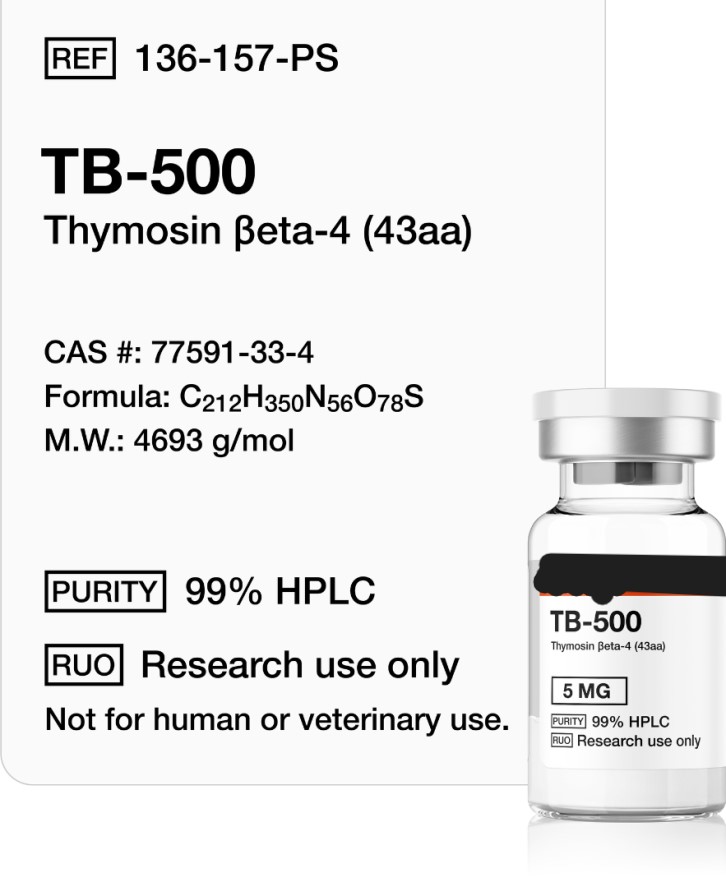
Description
TB-500 is a synthetic peptide based on thymosin beta-4 (TB-4), a naturally occurring protein found in almost every cell of the human body. Thymosin beta-4 plays an important role in tissue repair, inflammation regulation, and cellular movement. TB-500 was developed to mimic these biological functions in a more concentrated and systemically active form. Although widely discussed in research and athletic communities, TB-500 is not an approved medical treatment.
What Thymosin Beta-4 Does in the Body
Thymosin beta-4 is involved in many fundamental repair processes. When tissue is damaged, the body naturally releases TB-4 to help coordinate healing. It supports cell migration, reduces excessive inflammation, and contributes to the formation of new blood vessels. These actions make it especially relevant to wound healing and recovery from injury.
Because TB-4 exists naturally in the body, it is often described as a “maintenance” or “repair-support” peptide rather than a hormone that directly forces change.
How TB-500 Works
TB-500 works primarily by influencing actin, a structural protein inside cells that allows them to move and change shape. By regulating actin, TB-500 helps cells travel to injured areas where repair is needed. This process is essential for healing muscles, tendons, ligaments, skin, and connective tissue.
Unlike localized treatments, TB-500 is often described as acting systemically. Instead of targeting one specific injury site, it circulates throughout the body and may support repair wherever tissue damage exists. This whole-body activity is one of the reasons it has attracted so much interest.
TB-500 is commonly associated with recovery and regenerative research. Areas of interest include:
-
Muscle strains and soft-tissue injuries
-
Tendon and ligament healing
-
Inflammation modulation
-
Support for blood vessel formation
-
Possible reduction of fibrotic tissue
-
Interest in cardiovascular and nerve tissue repair
It’s important to note that these uses are largely based on early research, animal studies, and anecdotal reports rather than established clinical evidence in humans.
Biochemical Characteristics
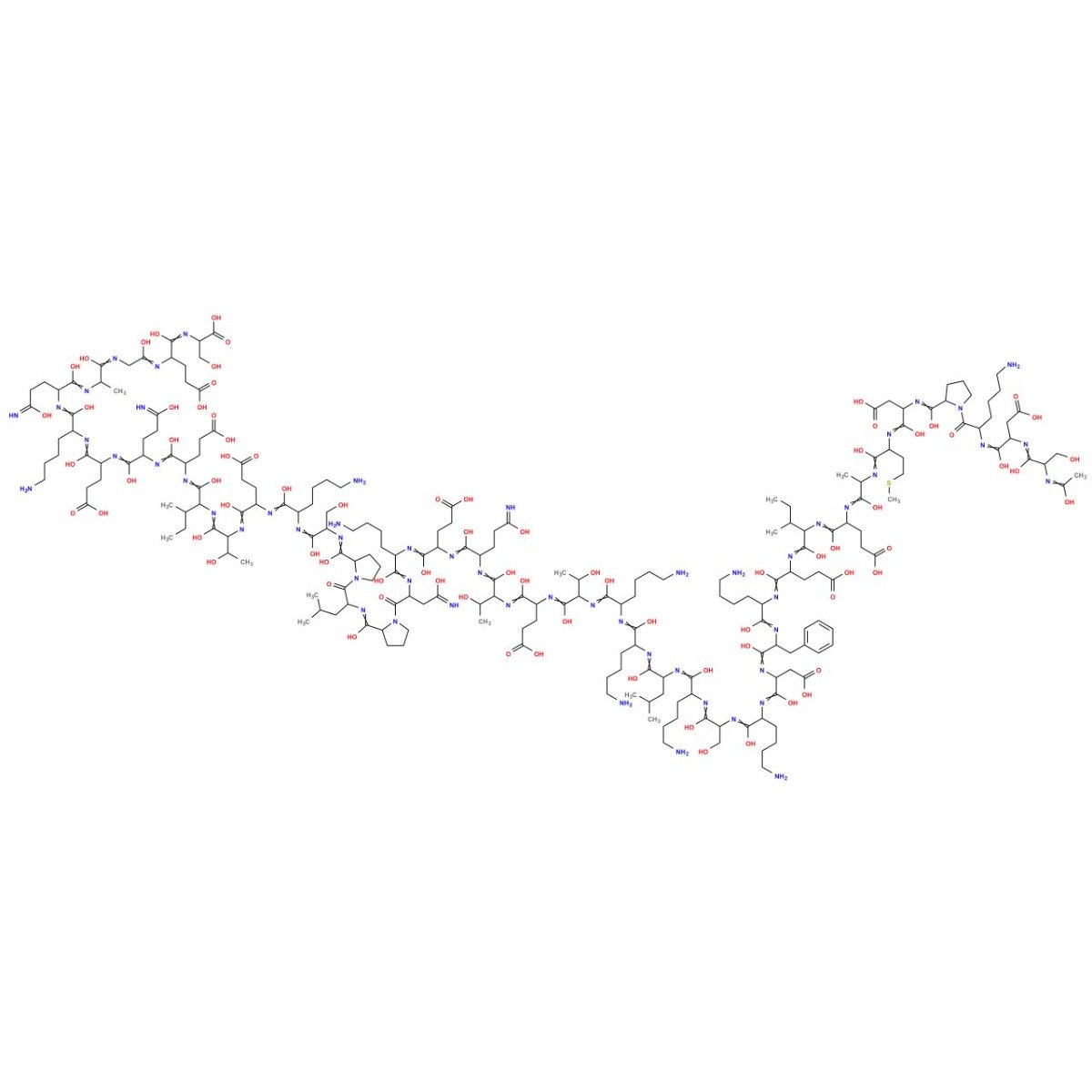
Sequence: Ac-Ser-Asp-Lys-Pro-Asp-Met-Ala-Glu-Ile-Glu-Lys-Phe-Asp-Lys-Ser-Lys-Leu-Lys-Lys-Thr-Glu-Thr-Gln-Glu-Lys-Asn-Pro-Leu-Pro-Ser-Lys-Glu-Thr-Ile-Glu-Gln-Glu-Lys-Gln-Ala-Gly-Glu-Ser
Molecular formula: C212H350N56O78S
Molar Mass: 4963.4408
CAS number: 77591-33-4
PubChem: CID 16132341
Research Applications
TB-500 is used in research workflows to probe cytoskeleton-dependent phenotypes and signaling readouts in controlled laboratory settings. Common experimental contexts include:
- Actin dynamics assays (G-actin sequestration, F-actin polymerization state, stress fiber organization)
- Cell migration and adhesion phenotyping (scratch assays, transwell migration, focal adhesion remodeling)
- Endothelial biology and angiogenic signaling readouts (tube formation assays, VEGF-axis transcriptional endpoints)
- Oxidative stress and innate signaling modules in cell systems (e.g., TLR-adaptor pathway readouts under defined stressors)
- Neural cell support and remodeling paradigms (glial lineage responses, neurite-associated morphology in preclinical models)
- Host-pathogen and adjunct biology paradigms in animal infection models (quantitative microbiology endpoints such as CFUs and inflammatory mediator readouts)
Reviews
There are no reviews yet.