
Description
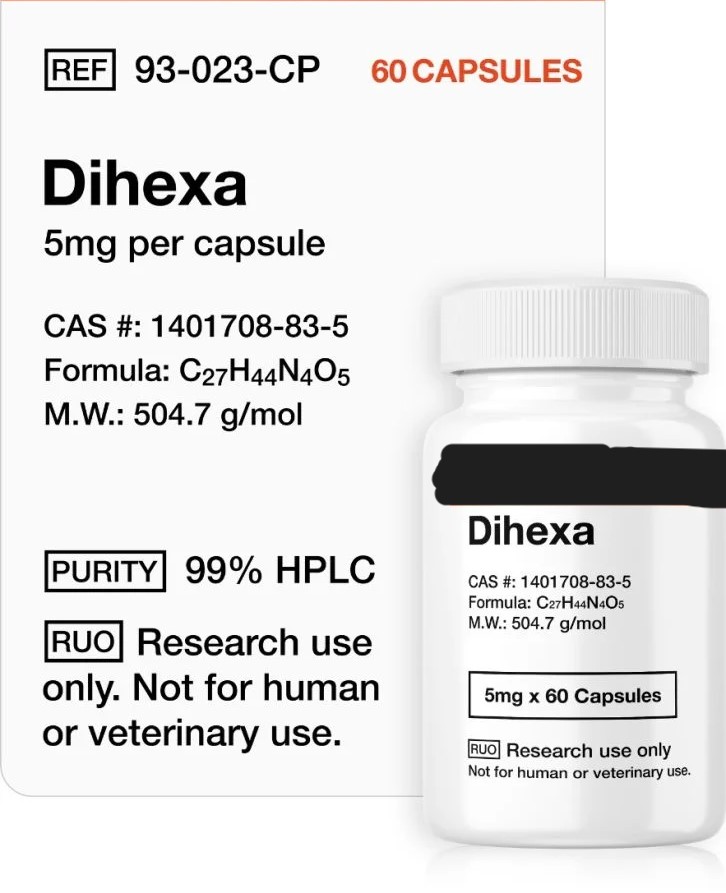
Dihexa (chemical name N-hexanoic-Tyr-Ile-(6) aminohexanoic amide, also known as PNB-0408) is a synthetic peptide developed from a fragment of the naturally occurring peptide angiotensin IV. It has been investigated primarily in preclinical research for its potential cognitive-enhancing and neuroprotective effects. Dihexa is able to cross the blood-brain barrier and interacts with growth factor pathways in the brain.
Mechanism of Action
Dihexa is believed to activate the hepatocyte growth factor (HGF) receptor, c-Met, which triggers signaling pathways that may promote:
-
Neuronal survival
-
Synaptogenesis (formation of new synapses)
-
Neurogenesis (growth of new neurons)
These effects are thought to underlie its cognitive-enhancing properties observed in animal studies.
Product Information
-
Formulation: Capsules containing 5 mg of Dihexa peptide.
-
Intended Use: Research purposes only; not approved for human or veterinary use.
-
Purity: Typically high purity (≥98%), verified using analytical methods.
-
Storage: Requires controlled storage conditions to maintain stability (cool, dry, and protected from light).
Research Evidence
Most evidence for Dihexa comes from animal and in vitro studies:
-
Rodent studies have shown improvements in learning and memory, reversal of chemically induced cognitive deficits, and increased synaptic density.
-
Preclinical studies suggest potential applications in models of neurodegenerative diseases such as Alzheimer’s, stroke recovery, and age-related cognitive decline.
-
No large-scale, peer-reviewed clinical trials in humans exist, and safety and efficacy in humans are unproven.
Biochemical Characteristics
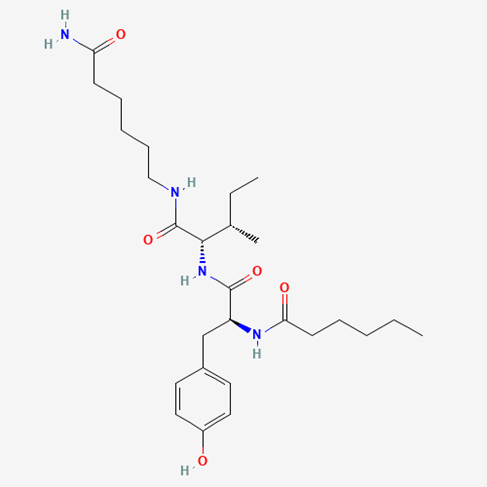
Source: PubChem
Amino Acid Sequence: Hexanoyl-Tyr-Ile-Unk (N-Hexanoyl-L-tyrosyl-N-(6-amino-6-oxohexyl)-L-isoleucinamide)
Molecular Formula: C27H44N4O5
Molecular Weight: 504.7 g/mol
PubChem CID: 129010512
CAS Number: 1401708-83-5
Reported Synonyms: N-hexanoic-Tyr-Ile-(6) aminohexanoic amide, PNB-0408, fosgonimeto
Dihexa is an N-terminally acylated peptide analogue structurally derived from angiotensin IV. Structural descriptions in the literature note the presence of an N-hexanoyl modification, which has been referenced in discussions of peptide physicochemical properties in experimental contexts.
All biochemical descriptions are limited to compositional and structural attributes reported in non-clinical research sources.
Research Applications
In the scientific literature, Dihexa has been referenced in non-clinical research settings involving cellular assays, ex-vivo preparations, and animal model studies. These references describe experimental contexts in which molecular interactions, signaling components, and pathway-associated markers were observed and recorded.
Research contexts reported include examination of:
- HGF/c-Met receptor-associated signaling components
- Angiotensin IV (AT4)-related molecular interactions
- Insulin-regulated aminopeptidase (IRAP)-associated biology
- Intracellular signaling cascade components
- Extracellular matrix–associated molecular markers
All reported applications remain confined to descriptive investigation within controlled laboratory research environments.
Pathway / Mechanistic Context
Mechanistic discussions in preclinical publications describe Dihexa in relation to the hepatocyte growth factor (HGF) / c-Met receptor system, a receptor tyrosine kinase complex associated with intracellular signaling cascades such as PI3K/AKT and MAPK-related pathways.
Additional references discuss angiotensin IV–associated signaling alongside insulin-regulated aminopeptidase (IRAP), a transmembrane aminopeptidase reported in studies of peptide processing, endosomal trafficking, and compartmentalized signaling.
These pathway descriptions are limited to molecular and biochemical observations reported in experimental research settings and do not imply functional outcomes.
Preclinical Research Summary
Preclinical studies referenced in the scientific literature describe observations involving Dihexa and related angiotensin IV analogues in cellular and non-clinical animal models. Reported observations include measurement of signaling-associated proteins, pathway-linked molecular markers, and morphology-related features documented under defined experimental conditions.
Separate rodent studies have reported experimental observations involving Dihexa within study-specific protocols, including histological and biochemical assessments. All reported findings are restricted to the experimental systems employed and do not extend beyond laboratory research contexts.
Form & Analytical Testing
Dihexa is supplied as a research-grade peptide material. Identity and composition have been reported as verified using analytical techniques commonly applied to RUO materials, including high-performance liquid chromatography (HPLC) and mass spectrometry (MS).
Handling, storage, and analytical verification parameters are determined by individual laboratories in accordance with internal research protocols.

Reviews
There are no reviews yet.