
Description
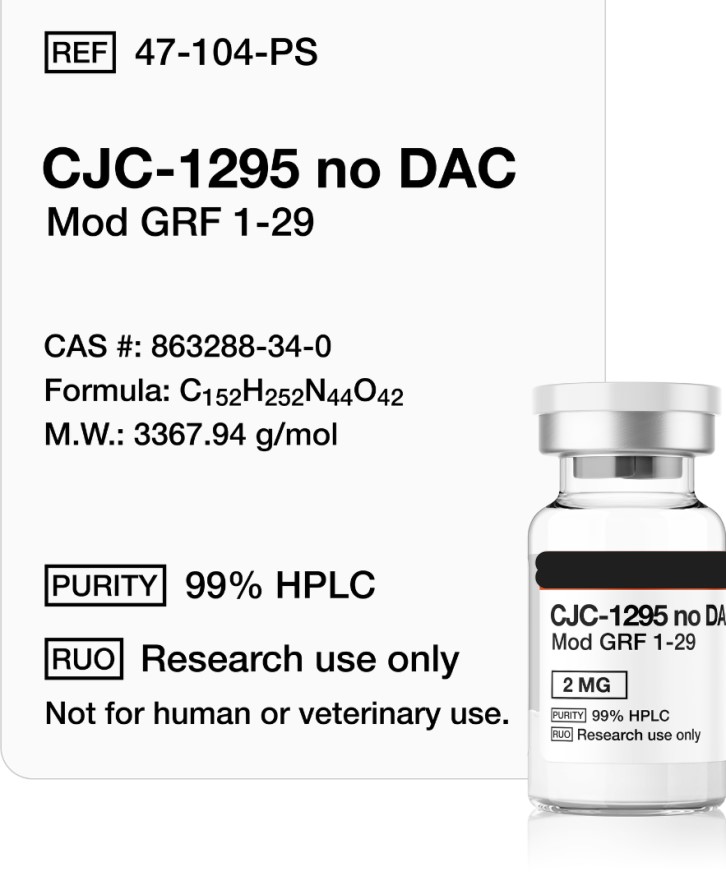
Modified GRF (1-29) is a synthetic peptide corresponding to the N-terminal 29–amino acid region of growth hormone–releasing factor (GRF), incorporating targeted amino acid substitutions to increase biochemical stability in experimental systems. This truncated analogue represents the GRF domain commonly used in laboratory studies focused on endocrine signaling and peptide–receptor interaction workflows.
The compound is commonly referenced in the scientific literature as CJC-1295 without DAC, distinguishing it from affinity-modified, extended-duration variants. In research settings, this non-DAC format is used to investigate receptor engagement, early signal initiation, and temporal pathway dynamics under controlled preclinical conditions.
This material is supplied strictly for research use in in-vitro experiments and in-vivo animal model studies.
Biochemical Characteristics
Sequence: Tyr-D-Ala-Asp-Ala-Ile-Phe-Thr-Gln-Ser-Tyr-Arg-Lys-Val-Leu-Ala-Gln-Leu-Ser-Ala-Arg-Lys-Leu-Leu-Gln-Asp-Ile-Leu-Ser-Arg-NH2
Molecular Formula: C152H252N44O42
Molar Mass: 3368.7 g/mol
Synonyms: Mod GRF 1-29, CJC-1295 (no DAC)
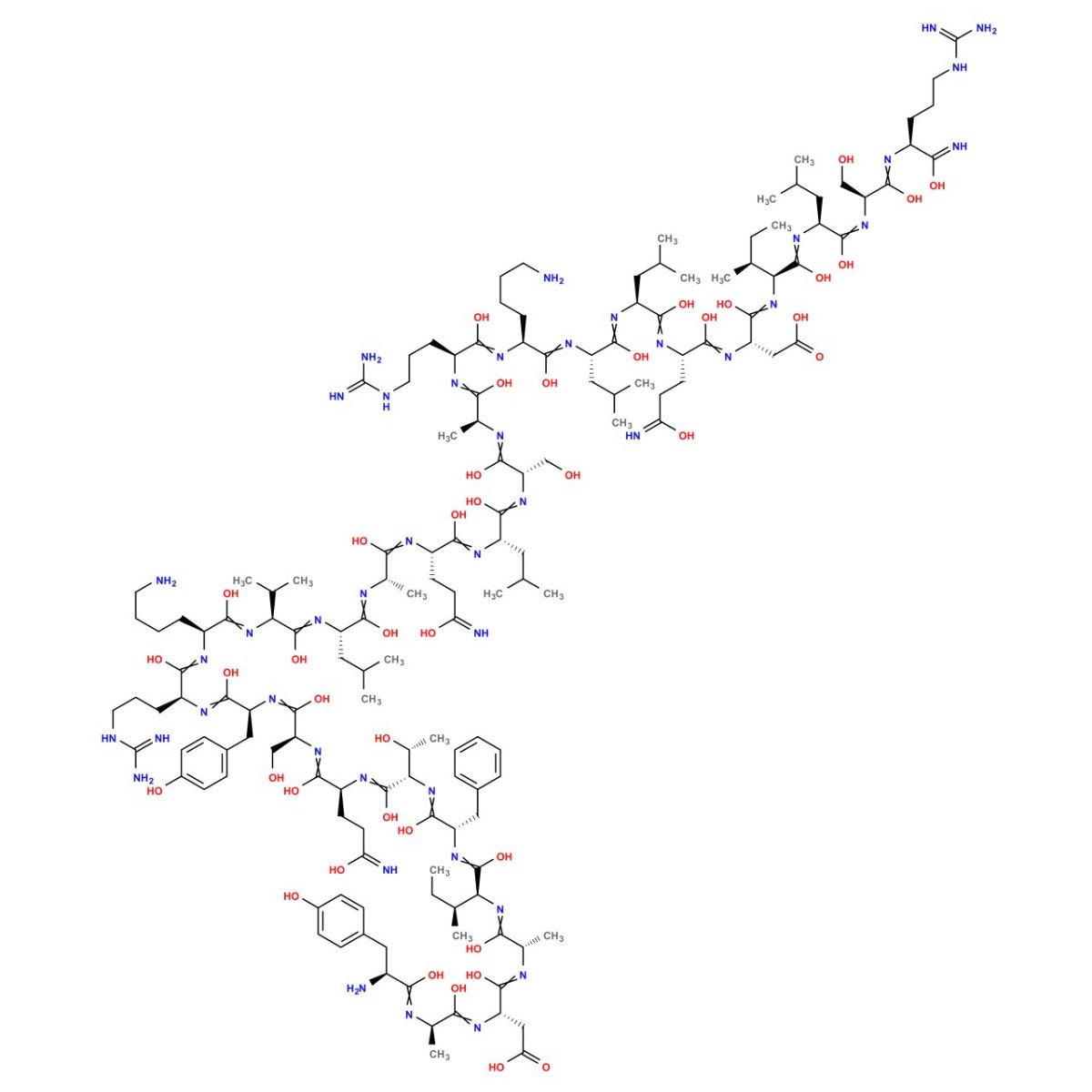
The substitution of D-alanine at position 2 is used in experimental peptide design to reduce susceptibility to enzymatic cleavage observed for native sequence motifs in biological matrices. C-terminal amidation is included to support conformational stability and consistent receptor-interaction behavior during in-vitro analysis.
Research Applications
Modified GRF (1-29) is used in laboratory research to investigate growth hormone–releasing hormone receptor (GHRHR) activation and associated intracellular signaling cascades. The peptide is applied as a tool compound for studying ligand–receptor dynamics, receptor kinetics, and second-messenger pathway modulation in controlled experimental systems.
Common experimental applications include:
- GHRHR binding affinity and kinetics assays
- Adenylate cyclase activation and cyclic AMP signaling studies
- Structure–activity relationship (SAR) comparisons among GRF(1-29) analogues
- Endocrine and neuroendocrine signaling investigations in cellular and animal research models
The absence of DAC modification is leveraged in experimental design to evaluate transient signaling events without long-acting affinity contributions.
Pathway / Mechanistic Context
Modified GRF (1-29) interacts with the growth hormone–releasing hormone receptor (GHRHR), a class B G protein–coupled receptor frequently studied for its primary coupling to Gs signaling. In canonical models, receptor activation stimulates adenylate cyclase activity, increasing intracellular cyclic AMP and engaging PKA-linked phosphorylation events and downstream transcriptional regulators.
This signaling axis is used in preclinical research to characterize receptor specificity, signal amplification, temporal activation patterns, and feedback regulation mechanisms within endocrine and neuroendocrine model systems.


Reviews
There are no reviews yet.